Silently but eloquently they testifyWhat archaeologists found in the 1st centuy A.D. Jerasalem house made the story clear: bronze arrowheads were embedded in the fire-blackened wall opposite the door, and a spear still The fall of Jerusalem in A.D. 70 should have been no big surprise. Again and again God had warned his people to repent. But they deceived themselves with this faulty argument: In Jerusalem is the temple of the LORD. Surely God would not allow His temple to suffer destruction. Perhaps they recalled God's earlier defense of Jerusalem in the days of Isaiah and Hezekiah, when His angel slaughtered 185,OOO Assyrian soldiers as they prepared to lay siege. Centuries before, however, Jeremiah had explained that God would not defend Jerusalem if the people continued their rebellion, temple or no temple. God still sounds the alarm today. In Galatians 6 Paul warns us that people, even Christians, reap what they sow, whether corruption from sowing to the flesh, or life eternal from sowing to the Spirit. Peter urges us to be holy and godly as we wait for the coming day of the Lord (2 Peter 3:11-12). James predicts a coming "day of slaughter" (James 5:5). The Burnt House ondisplay in Jerusalem today is a silent but eloquent testimony that we cannot ignore God's warnings without suffering due consequences. God gave us these warnings not to infuriate us, but to preserve our spiritual life. He will defend His obedient servants, but not rebels. |
| —Steve Singleton DeeperStudy.com |
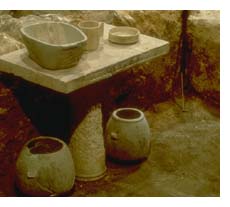 leaned against the wall in one corner. The owner of the house must have been killed by soldiers before he could reach his weapon. If the man's wife and children survived, the soldiers probably molested them and then led them off into exile or slavery.