Are we worthy of the name? |
|
As a child I pored over maps, tracing the highways and looking for unusual cities and towns. Imagine my joy one day when I found “Singleton, Texas.” I showed my parents, my brother, and my sisters the little dot half-way between Bryan and Huntsville. “Someday,” I told them, “I am going there for a visit.”
Two summers ago I had that opportunity. Because my wife Cindy and I were in that area, we made the time to drive from Huntsville out toward Bryan. We looked up the road and to both sides, but there was no downtown, no post office, not even a country store with gas station. In fact, we had to look hard to find the one house nearby. “I don’t know where the name came from,” the young man there said, “It’s just always been called Singleton.” The old graveyard lacked even one Singleton among the markers. Across a dirt road from it stood the rotting ruins of a clapboard house. Nothing else. The sign was all that was left of Singleton, Texas. It was a bitter disappointment. Jesus told the church in Sardis, “I know your deeds: you have a name that you are alive, but you are dead” (Rev. 3:1). The Christians in Sardis were a bitter disappointment to the Lord. Why? Because they had not fulfilled the work Jesus had given them to do (3:2). He warned that if they did not wake up and finish the job, he would come to them unexpectedly and punish them (3:3). We make a big deal of the name “church of Christ,” and rightly so. Christ deserves all of the credit we can give him. But bearing that name commits us to a Christ-like lifestyle and a Christ-honoring mission, worship, and body-life in our congregation. Let’s examine the work God has given to us and find the joy in fulfilling the challenges He presents to us. Otherwise, we are just another Sardis. Just another Singleton, Texas. |
| —Steve Singleton DeeperStudy.com |
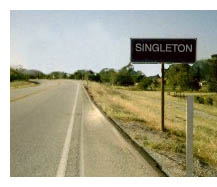 One right turn and four miles later, I pointed and shouted, “There it is!” We pulled off the two-lane road and parked the care beside the green and white sign that said, “Singleton.”